
Seven plumbing problems worth fixing before the monsoon
Every one of these is cheap and boring in April and expensive in July. What to check on the terrace, in the bathrooms and around the tank before the rain arrives.
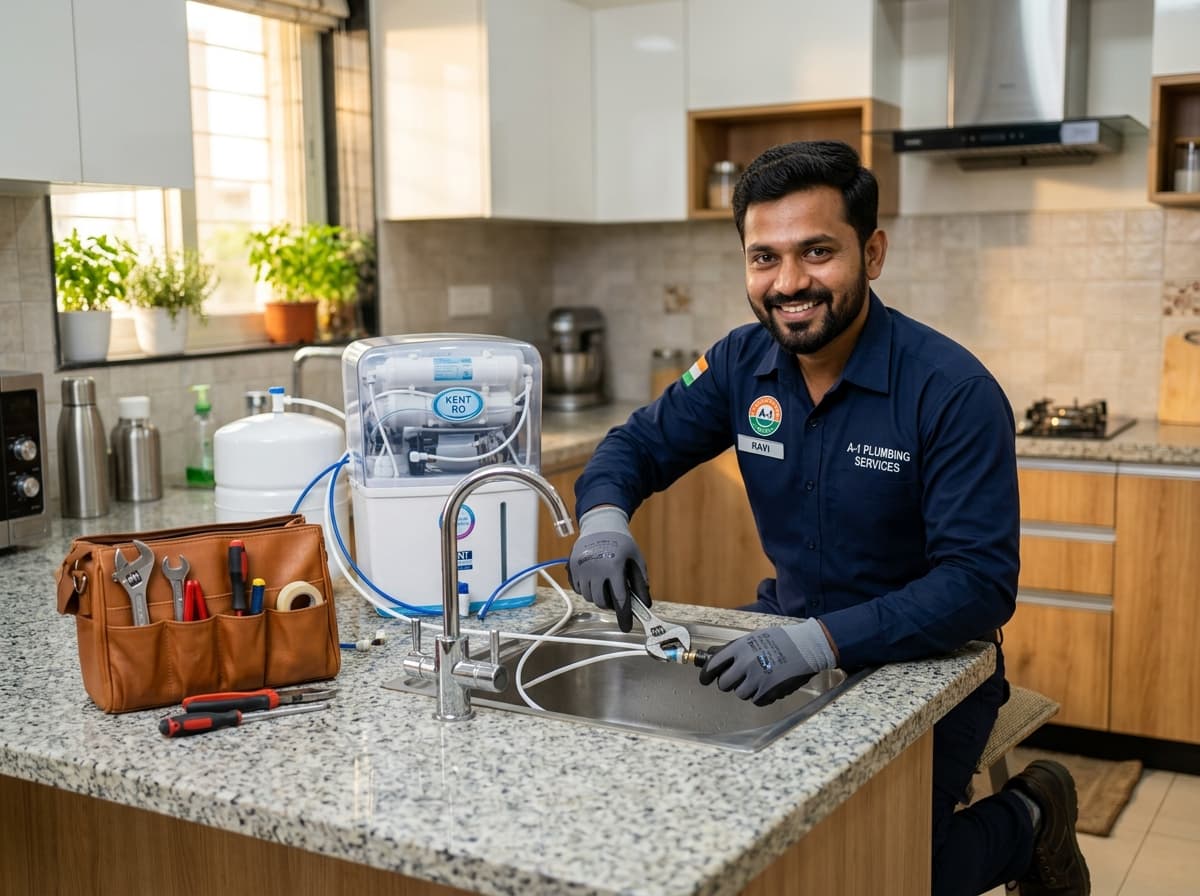
Servixo Editorial5 min read
Almost nothing on this list is dramatic. They are all small, dull faults that sit there for months doing no harm at all — until a week of heavy rain turns each one into water somewhere it should not be. A blocked terrace outlet costs a few hundred rupees to clear in April. The same outlet in July can mean a damp patch across a bedroom ceiling and a repainting job in October.
The window for this work is the four to six weeks before the rain sets in, which in most of India means late April through May. Here is what is worth checking.
1. Terrace and balcony rain outlets
The single highest-value check on the list.
Flat roofs drain through a handful of outlets, and over a dry season they fill with leaves, silt, cement dust and — reliably — a plastic bag. When they block, the terrace holds water instead of shedding it. Standing water finds every hairline crack in the slab, and the first you know about it is a stain on the ceiling below.
Go up, clear every outlet by hand, and then test it: run a hose or empty a bucket at the far corner and watch where the water actually goes. It should reach an outlet and disappear. If it pools anywhere, the slope is wrong or the outlet is still partly blocked, and both are worth sorting out now.
Check the grating too. A missing grating means the outlet blocks again by June.
Ponding is not cosmetic
Water standing on a terrace for days is the most common cause of slab seepage in Indian homes, and it is the most expensive to fix once it has started — waterproofing a damp slab costs many times what clearing a drain costs.
2. Slow floor traps and gully traps
If a bathroom or utility floor trap drains slowly in dry weather, it will back up in wet weather. Ground-floor gully traps connect to a system that is running near capacity during heavy rain, and anything already restricted has no margin left.
Test each one with a full bucket of water. It should clear in a few seconds without gurgling. Slow or noisy means hair, soap scale or silt in the trap, and it is a straightforward clean. While you are there, check that every trap has an intact grating and that the water seal is still holding — a dry trap is how drain smell gets into a room.
For ground-floor and basement fixtures on a mains sewer, ask a plumber whether a non-return valve is fitted. It is the one thing that stops a surcharged sewer from coming back up through your floor trap, and retrofitting one is far cheaper than the alternative.
3. The overhead tank ball valve
A ball valve that no longer seats properly lets the tank overflow every time it fills. Through the dry months this is a water bill and a nuisance. Through the monsoon it means the terrace is permanently wet, on top of everything the rain is already doing, and it keeps the slab from ever drying out.
Watch a fill cycle. The valve should shut cleanly with no dribble. If the arm has corroded or the float has taken on water and sits low, replace it — the part is inexpensive and the job is short.
While the lid is off, check that it seals. An open or cracked tank lid takes in rainwater, leaves and worse during a storm, and that is your drinking supply. If the tank has not been cleaned in six months or more, water tank cleaning is worth booking in the same window.
4. Bathroom sealant and the shower junction
Silicone around the shower tray, the bath, the WC base and the junction between floor and wall does not last forever. It shrinks, lifts at the edges and grows black mould in the gaps.
Once there is a gap, water goes behind the tile rather than down the drain, and it appears as a damp patch on the other side of that wall — usually in a bedroom or a hallway, weeks later, where nobody connects it to the bathroom. Humidity through the monsoon means it never dries out and never recovers.
Raking out old silicone and re-sealing is an afternoon's work and the cheapest preventative job in the house. Do it in dry weather so the surfaces are properly dry when the new bead goes on, which is exactly why this is a pre-monsoon task.
5. External downpipes and pipe brackets
Walk the outside of the building and look up. You are checking for three things:
- Loose or corroded brackets, which let a pipe pull away from the wall.
- Open joints, where two lengths of pipe have separated slightly.
- Missing or cracked shoe at the bottom, so water discharges against the plinth instead of away from it.
A downpipe joint that has opened by five millimetres sprays water directly at the wall every time it rains hard. Inside, that becomes a damp patch and eventually peeling paint, and everyone blames the roof.
6. Dripping taps and the leaks you cannot see
A dripping tap is obvious and worth fixing on its own merits. The concealed leak behind a wall is the one that matters, and the monsoon hides it — once everything is damp, one more damp patch does not stand out.
Find it now with a meter test. Shut every tap and appliance in the house, note the meter reading, and leave it two hours without using water. If the reading has moved, water is going somewhere. Falling pressure at an upper-floor tap, a warm patch on a floor, or a pump that cycles on when nothing is running are the other symptoms.
7. The sump and its lid
Underground sumps sit below the water table during heavy rain, and a cracked wall or a poorly sealed lid lets groundwater and surface runoff in. That is contamination of the whole house supply, not just an inconvenience.
Check that the lid seats properly and that the surrounding slab slopes away from it rather than towards it. If the sump is in a spot that puddles, raising the collar by a couple of inches is a small job that solves it permanently.
Doing it in one visit
Most of this is a single plumber for half a day, and it is far more efficient to have one person work through the whole list than to call someone out three times between June and September. Write down what you found while checking — which trap was slow, which joint was open, which tap drips — and hand that over at the start. A plumber who knows what they are looking for arrives with the right parts.
If you would rather have the whole list worked through at once, that is a straightforward plumbing visit to book while the weather is still dry.
More reading
Other guides
 Cleaning
What deep cleaning actually covers, and what it doesn't
Most disappointment with a deep clean comes from a mismatch about scope, not from bad work. What is standard, what is usually an extra, and what no cleaning can fix.
 AC Services
How often should you actually service your AC in Bangalore?
The "once a year" rule is a national average, and Bangalore is not an average city. A schedule based on running hours, dust and the monsoon instead of the calendar.
Ready when you are
Book a service in under a minute, or register as a Service Provider and start taking work in your area.